Tuesday, August 28, 2012

Free (corn) Markets


Just incase you’ve been living under a rock for the last 3 months or so, the Midwest, hell, the whole country, has been gripped by a massive drought, which has crippled yields, especially for corn and soybeans. In fact, the crop failures are so massive, that corn and soybean “futures” (prices) have reached record levels; and those costs, unfortunately, will in some way be passed on to the consumer. 

It’s not that we want to charge you more, but our hands are tied. The corn cattle and chickens eat is more expensive; same goes for the soybeans that pigs and dairy cows consume. And then, there’s the pink elephant in the room: 

Ethanol.

Many, many grain famers, like myself, sell some of their corn for ethanol production. Now, there is a by-product, called DDG, that is fed to cattle in place of “whole” corn, so it’s not a total net-loss for feed. However, that hasn’t stopped several livestock groups and some producers from calling for a “waiver” for the amount of ethanol the government says we need to put into our gasoline.

Now understand, I’m writing this from the perspective of a grain farmer; but I’m also writing as a consumer of meat and dairy products. What I have the biggest problem with, in this whole “waiver” debate, is that the government is picking winners and losers, and when that happens, we all loose.

If we allow the government to shut down ethanol production to satisfy the demands of livestock producers, then what about the inverse? When corn prices crash, can we demand an increase in ethanol to prop up my industry? How about then dairy prices drop; should we control supply with a national quota system? The same quotas could apply to pigs, turkeys, ect. 

If we head down this road today, we are asking the government to take away our rights to free markets tomorrow. 

I’m not going to propose a solution to this issue; I know folks at all corners of this table who are struggling, and who have strong opinions. The larger question I simply want to ask, is, are we as farmers and ranchers ready to give the government this much control over the principals of free market economics that we all thrive under??

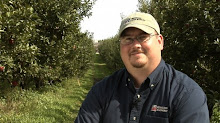
Jeff VanderWerff is a 4th generation fruit and grain farmer from Sparta, Michigan. To learn more about his family farm, and the drought, visit www.youtube.com/agsalesman

Tuesday, June 5, 2012

Bailouts, Handouts, and Crop Insurance


So there seems to be a lot of confusion out there by many people, including people who I believed understood how this system works for farmers. In the spirit of full disclosure, the numbers I’m sharing are generalized, and this blog is going to be long...so bail now if you’re not into understanding economics, farm finance, and insurance.
People often see or hear about a crop loss, in this case fruit, and wonder about the “bailout” the farmers will receive. Well, first off, there is no bailout. My farm isn’t GM, and I don’t have union clout to demand help. The government does provide disaster payments, so I’ll address those first.
When you hear about a farmer receiving a disaster payment, some would have you believe that a USDA or FSA (Farm Service Agency) person shows up at the farm, says “well Jeff, how bad was it?” and whips out a check for a couple of hundred grand. Let me impart some reality on you; we last had a major freeze event in 2010. Joe and I lost about 1/2 of our crop that year, and the government declared a disaster for our area. That started a going-on-two-year bureaucratic nightmare that still hasn’t resulted in my seeing a single damn dime of money. Is the government going to just “mail me a check”? Probably, but who knows when; if it was really that dire, I’d be bankrupt looonnnngggg before those ultra efficient government employees decided to act. Oh, and the amount? Probably about 20 or 30 thousand dollars which yes, sound like a lot, but when your farm has gross revenue north of 300 thousand a year, it’s peanuts.
So that brings us to crop insurance, which most of us have, and all of us support. So here’s the basic rundown of how it works; every year in October, I have to decide if I want to have insurance for the next year; keep in mind, I’m still picking my current crop and now I need to start making decisions about my NEXT crop. And if I do want insurance, you pay now. Upfront. Like, 20 grand. And no, they don’t except monthly payments, food stamps, or American Express. It’s cash on the dash if you want to play. So let’s say we do have that catastrophic loss that we saw this year; first, it’s not like car insurance. They don’t run out, look at the damage, and pay. They wait; we MIGHT see an adjuster by July or August. And the check? Probably October 1, best case. So every year, you write this check, hoping you don’t freeze, or have hail, but if you do you have your crop insurance. Payday, right? Well, check out the math....
So here’s where the rubber meets the road. How much insurance money comes in, versus how much it costs to keep the lights on. So here it is:
Crop insurance revenue: roughly 1100 dollars per acre; I farm about 120 acres.
Cost of sprays, trimming, mowing, and maintenance: around 1300 dollars an acre.
Cost of payments for such minor things as: land, bank loans, machine payments, insurance, utilities, ect: around another 75 thousand dollars a year.
So do the math: at the end of the day, even this this “huge payout” I’m loosing my ass. Plain and simple. Crop insurance isn’t about a “giant payday”, it’s about keeping the wolves away and hopefully living to fight another day. 
And here’s where the shit really hits the fan; we have NO apples. NONE. ZERO. ZILCH. Ok, well, I did find enough for a pie the other day, but that’s about it. See, normally, a loss of 1/2 the crop would trigger an insurance payment; or a hail event would trigger it. In either case, you still have some apples to sell, for something. Even we lost 1/2 the crop, we’d have enough to sell, with the insurance proceeds, to break even. Not the case this year; the crop insurance check I’ll receive this fall is the only revenue my farm will have until about October....of 2013.
So let me put it in real terms for most people: you make 100,000 dollars per year. Due to a disaster, you aren’t going to receive your pay, but you have insurance. In the analogy, you would be receiving about 40,000 dollars. Could your family live on that? Think you’d have to cut back on anything? 
Right now, the farm bill is being re-written; the main debate focuses on direct payments and crop insurance. This farmer supports eliminating direct payments, and improving crop insurance. I hope you’ll do the same.

Sunday, May 13, 2012

What's in a (local) name?

 So on our weekly trip to Meijer this week for groceries, Alyssa and I did our typical stroll through the dairy case for a few items, and to look at food in general (yeah, exciting life I live), when we made this discovery.

Now, at first glance, you say, wow, great, local, Michigan brand cottage cheese!! Finally, I can support a local brand for my cottage cheese needs!!


So, you spin the container around, and you see this....


Ohio, you say!??! What the hell, I thought this was a Michigan product!??! Ohio!??!


So you read down a little further, and you start seeing this plant number codes...

Plant Codes Here ^^^^

So what exactly are plant codes?? Well, my friend, the plant code tells you exactly where the product came from, mainly incase there is ever a recall. But for our purposes, it's going to tell us where the product was made, and most likely, where some of its ingredients came from. In this case, it came from plant 26-330. Using our handy-dandy link to the FDA's website we see that the first numbers, 26, signify a Michigan plant. The second numbers, 330, are the plant code; plant 330 is the Country Fresh plant located in Grand Rapids. This plant uses milk from many of my neighbors, and a lot of milk from West Michigan in general.


Same product, same plant, same milk.

The "Michigan" brand: 3.99

Country Fresh brand: 2.49

Just because the label says where it came from, in this case Ohio, that doesn't mean it actually came from there. When in doubt, check the label, and if you're still unsure, do a little research. The information is out there.

Wednesday, February 29, 2012

Dale Carnegie: More important than John Deere

Right now, there seems to be a lot of debate, some quite heated, within the ag community as to how we should or should not be connecting with consumers. We've started hearing words like "agtivist", which would imply that we have left the relm of rational discussion, and moved into the world of extremism.

I would disagree with that.

In nearly ten years on the road in sales, I becase a deciple of the teaching of Dale Carnegie. The Carnegie teachings of how to Win Friends, and Infulance People literally changed my life and the way I interact with people. That said, I belive strongly that we can't use a one-way approach to talk with consumers about what we do; they don't want to be told, they want to have a dialouge. However, we need to recognize that there are people who will confront us, question us, and villify us who have zero interest in polite conversation.

I think back a couple of weeks ago to the Chipotle commercial issue; now, if a person saw that ad, had questions, and is truely interested in a conversation about what they saw and didn't understand, I'm all in. I'll spend hours trying to explain what we do, and how we do it, as long as your willing to listen. However, when you come out swinging with the typical "factory farm" and "corperate ag" remarks, I'm going to get defensive. At that point, you've pretty much shown me your not interested in a discussion, your interested in causing trouble.

Now, there are those among us that believe we can win everyone to our way of thinking by holding hands and singing a little song; but I'm more of a realist. When you really cut down to it, 20% are for us, 20% are against us, and 60% are in the middle looking for real answers; and it's that 60% I'm after.

Conversation with consumers is valuable, and it's a necessary part of what we do now as farmers; just make sure that when you're talking, your audience is listening.

Monday, January 2, 2012

Priorities.


Like all farmers, we spent the last couple weeks of a successful year talking about what to do with the fruits of our labor (that would be profits, which can be rare in the farming world) and decided to come up with some priority items for 2012. Now, I’ve heard lots of chatter from other farmers about the new combine or tractor they wanted to pick up, or about pre paying for some of their fertilizer for next year. Our list, however, looked a little different.


Item number 1 on the 2012 goals list: obtain MAEAP (Michigan Agricultural Environmental Assurance Program) verification. For those that don’t know, this is a voluntary, grower-initiated stewardship program under which your farm goes through an extensive third-party audit to certify that you are using the best environmental stewardship practices. It can be costly, and is time-consuming, but it is worth it to know we are doing everything possible to protect our natural resources. We needed to complete a couple of major items before we could proceed, so that’s where the money went first.


Item number 1: New orchard sprayer. Our old sprayer worked, but this new machine is the most state-of-the-art sprayer available. It will allow us to better control where we spray, and also allow us to use lower use rates of our pesticides, because the coverage is so much better. Expensive, but very, very worth it.


Item number 2: Fuel containment diking and a loading pad. Now, this is something that we could have applied, and waited around for, government conservation funding, but this is important. We decided to make it a priority issue, get it built, and move on. In reality, this was the one major item that was holding our verification up, so now we should have no trouble obtaining our certification.


When it comes down to it, we will end up making the same business investments that other farmers make; more grain storage, maybe a newer semi tractor, or a even a new combine. But right now, we’re going to make sure we’re doing whatever it takes to protect our natural resources, because at the end of the day, if we don’t have our land, then that combine is going to be a really expensive lawn ornament.

Tuesday, December 13, 2011

Grandpa's Way

Surfing though my twitter feed today, I came upon a great quote from a friend of mine regarding how people who aren't involved in farming or ag today seem to think we should do things the way their grandfather did, on his farm. While my grandfather certainly did teach me a lot of things about farming, there are more than a few things that were common in his day that we've moved beyond. So, before we head down memory lane, let's look at a few common practices in "his day" versus what we're doing now.

Things like...
Used oil. Grandpa used to dump it in the driveway "to keep the dust down". Today, we recycle it, along with batteries, chemical jugs, and trash. Grandpa's solution was "the dump".

Spray programs. Grandpa used to spray atrazine on corn by the gallon, and used chemicals in the orchard that killed every bug in the township. Today, we are using lower pesticide rates than ever before, and integrated pest management has changed how we manage orchards.

Conservation. Grandpa would plow, disk, and drag the soil into a powder, then plant the corn. We've been using no-till farming since the early 1990's, and have installed filter strips and wildlife habitat area around the farms. Stewardship is a major concern.

So, as you can see, sometimes the "good ol' days" aren't so great. Farming has changed dramatically, but not always for the worse. So, before you criticize what we do, try to learn why we are doing it first.

Jeff VanderWerff is a 4th generation farmer from Sparta, Michigan. Learn more about his family farm at www.youtube.com/agsalesman


Friday, September 9, 2011

The 9/11 Blog.


10 years. So much happens in your life in 10 years, it’s hard to put it into quantitive terms sometimes. Think about it; what has happened to you? Did you graduate college, get married, start a family? For 343 of my brothers in New York, these things didn’t happen in the last 10 years, because they showed the supreme courage that firefighters all have.


This is my 9/11 story.


In the spirt of full disclosure, what you are about to read is something I’ve never talked about; not with my wife, my family, no one. Public servants are trained that when you see or experience something horrible, you don’t show any emotion; you bottle it up, and deal with it later.


Well, it’s later.


In June of 2001, I decided to become a fireman; my cousin Jon, who had just finished his police academy, talked me into it. I liked the idea of serving my community, and helping people, but wasn’t real big on being shot at. Fire seemed pretty safe; I mean, hell, all that gear, lots of training, no biggie. So I joined Kent City Fire, a small volunteer department in northern Kent county. It’s your typical small town department, with lots of legacy members, lots of tradition, and not a ton of calls.


In deciding that I wanted the best training, mainly because this sounded like a great career choice for me, I enrolled in the fire academy at Lansing Community College. We started the last week of August, 2001, and quickly began to gel as a group. The guys were fun, the training was exciting, and we got to wear some pretty cool uniforms to class. When I woke up on a tuesday morning, September 11th, and headed for our training tower, I had no idea how much different things would be when I got back to my apartment.


Class started at 8am, and by now we were starting to get into the meat of the program; we knew how to use our gear, and knew some basic techniques. Today’s lesson would be ladders; how to use them, where to place them, and how not to fall-pretty simple stuff. Around 9am, we stared hearing a lot of commotion coming from the command office where the battalion chiefs were having their weekly meeting. A plane had just hit the world trade center. Wow. Ok, well, it’s the FDNY, the world’s best. No sweat, class resumes. All of a sudden, people are running from the command center, jumping in their Tahoe’s, and screaming out, lights and sirens running. A second plane hit, and we were officially under attack. We all just kinda stood there for a minute, just going through the motions. We were all trying to process what was happening. Then, the next word from the TV; One World Trade had collapsed; we knew there must have been hundreds of guys inside when it came down; everyone stopped. One of our instructors, Captain Baker, told us we could head home, and told us to pray. What happened next, I believe, is when we became brothers, and when the bond was forged not just with us, but will all the guys in New York.


Gil Torres, a guy in our group, asked everyone if we would join him in prayer. Without a word, we all hit our knees, turnout gear and air packs still on, and joined hands. Gilbert prayed for the guys in New York, for the people on the planes, and for our troops who would soon be fighting this new enemy. We all prayed with him, because at that moment we began to know, began to realize a new, chilling fact.


That could have been us. All of us. Together. Gone.


The next couple of days were a blur, it seemed. We went to class, we continued to train, but with heavy hearts, and a lot on our minds. People looked at us differently on campus; they stepped aside, or just stared. I mean, how crazy were we? We had just watched 343 guys die on the job, and here we were, training to do the exact same thing.


Thursday morning is when it really hit me what had happened. I was heading east on Michigan Ave towards the capitol, and LCC. Stopped at a light, I noticed the bright sunshine just rising over the capitol dome, and there was the American Flag, flying in all it’s glory. As fate would have it, the radio began to play “God Bless the USA”, and it hit me; all the emotion, all the anger, all the sadness. As the light turned green, I tried to pull myself together, and noticed something that was strangely reassuring; the guy in the car next to me was crying too. For that moment, I realized that it was ok, everyone was hurting, scared, and angry. Someone had sucker punched us, but we weren’t going down without a fight.


Since that day, a lot has happened. There have been memorials, parades, and services. Publicly, we remember that day every September, and sadly, that’s the only day I think a lot of folks think about it. For those of us that are part of the brotherhood, we remember them everyday. I think about those guys every time I go into a fire, or respond to a wreck, or a medical call. I remember their courage, and their sacrifice, and sometimes I wonder what the world would be like if more people did as well.