Wednesday, February 29, 2012

Dale Carnegie: More important than John Deere

Right now, there seems to be a lot of debate, some quite heated, within the ag community as to how we should or should not be connecting with consumers. We've started hearing words like "agtivist", which would imply that we have left the relm of rational discussion, and moved into the world of extremism.

I would disagree with that.

In nearly ten years on the road in sales, I becase a deciple of the teaching of Dale Carnegie. The Carnegie teachings of how to Win Friends, and Infulance People literally changed my life and the way I interact with people. That said, I belive strongly that we can't use a one-way approach to talk with consumers about what we do; they don't want to be told, they want to have a dialouge. However, we need to recognize that there are people who will confront us, question us, and villify us who have zero interest in polite conversation.

I think back a couple of weeks ago to the Chipotle commercial issue; now, if a person saw that ad, had questions, and is truely interested in a conversation about what they saw and didn't understand, I'm all in. I'll spend hours trying to explain what we do, and how we do it, as long as your willing to listen. However, when you come out swinging with the typical "factory farm" and "corperate ag" remarks, I'm going to get defensive. At that point, you've pretty much shown me your not interested in a discussion, your interested in causing trouble.

Now, there are those among us that believe we can win everyone to our way of thinking by holding hands and singing a little song; but I'm more of a realist. When you really cut down to it, 20% are for us, 20% are against us, and 60% are in the middle looking for real answers; and it's that 60% I'm after.

Conversation with consumers is valuable, and it's a necessary part of what we do now as farmers; just make sure that when you're talking, your audience is listening.

Monday, January 2, 2012

Priorities.


Like all farmers, we spent the last couple weeks of a successful year talking about what to do with the fruits of our labor (that would be profits, which can be rare in the farming world) and decided to come up with some priority items for 2012. Now, I’ve heard lots of chatter from other farmers about the new combine or tractor they wanted to pick up, or about pre paying for some of their fertilizer for next year. Our list, however, looked a little different.


Item number 1 on the 2012 goals list: obtain MAEAP (Michigan Agricultural Environmental Assurance Program) verification. For those that don’t know, this is a voluntary, grower-initiated stewardship program under which your farm goes through an extensive third-party audit to certify that you are using the best environmental stewardship practices. It can be costly, and is time-consuming, but it is worth it to know we are doing everything possible to protect our natural resources. We needed to complete a couple of major items before we could proceed, so that’s where the money went first.


Item number 1: New orchard sprayer. Our old sprayer worked, but this new machine is the most state-of-the-art sprayer available. It will allow us to better control where we spray, and also allow us to use lower use rates of our pesticides, because the coverage is so much better. Expensive, but very, very worth it.


Item number 2: Fuel containment diking and a loading pad. Now, this is something that we could have applied, and waited around for, government conservation funding, but this is important. We decided to make it a priority issue, get it built, and move on. In reality, this was the one major item that was holding our verification up, so now we should have no trouble obtaining our certification.


When it comes down to it, we will end up making the same business investments that other farmers make; more grain storage, maybe a newer semi tractor, or a even a new combine. But right now, we’re going to make sure we’re doing whatever it takes to protect our natural resources, because at the end of the day, if we don’t have our land, then that combine is going to be a really expensive lawn ornament.

Tuesday, December 13, 2011

Grandpa's Way

Surfing though my twitter feed today, I came upon a great quote from a friend of mine regarding how people who aren't involved in farming or ag today seem to think we should do things the way their grandfather did, on his farm. While my grandfather certainly did teach me a lot of things about farming, there are more than a few things that were common in his day that we've moved beyond. So, before we head down memory lane, let's look at a few common practices in "his day" versus what we're doing now.

Things like...
Used oil. Grandpa used to dump it in the driveway "to keep the dust down". Today, we recycle it, along with batteries, chemical jugs, and trash. Grandpa's solution was "the dump".

Spray programs. Grandpa used to spray atrazine on corn by the gallon, and used chemicals in the orchard that killed every bug in the township. Today, we are using lower pesticide rates than ever before, and integrated pest management has changed how we manage orchards.

Conservation. Grandpa would plow, disk, and drag the soil into a powder, then plant the corn. We've been using no-till farming since the early 1990's, and have installed filter strips and wildlife habitat area around the farms. Stewardship is a major concern.

So, as you can see, sometimes the "good ol' days" aren't so great. Farming has changed dramatically, but not always for the worse. So, before you criticize what we do, try to learn why we are doing it first.

Jeff VanderWerff is a 4th generation farmer from Sparta, Michigan. Learn more about his family farm at www.youtube.com/agsalesman


Friday, September 9, 2011

The 9/11 Blog.


10 years. So much happens in your life in 10 years, it’s hard to put it into quantitive terms sometimes. Think about it; what has happened to you? Did you graduate college, get married, start a family? For 343 of my brothers in New York, these things didn’t happen in the last 10 years, because they showed the supreme courage that firefighters all have.


This is my 9/11 story.


In the spirt of full disclosure, what you are about to read is something I’ve never talked about; not with my wife, my family, no one. Public servants are trained that when you see or experience something horrible, you don’t show any emotion; you bottle it up, and deal with it later.


Well, it’s later.


In June of 2001, I decided to become a fireman; my cousin Jon, who had just finished his police academy, talked me into it. I liked the idea of serving my community, and helping people, but wasn’t real big on being shot at. Fire seemed pretty safe; I mean, hell, all that gear, lots of training, no biggie. So I joined Kent City Fire, a small volunteer department in northern Kent county. It’s your typical small town department, with lots of legacy members, lots of tradition, and not a ton of calls.


In deciding that I wanted the best training, mainly because this sounded like a great career choice for me, I enrolled in the fire academy at Lansing Community College. We started the last week of August, 2001, and quickly began to gel as a group. The guys were fun, the training was exciting, and we got to wear some pretty cool uniforms to class. When I woke up on a tuesday morning, September 11th, and headed for our training tower, I had no idea how much different things would be when I got back to my apartment.


Class started at 8am, and by now we were starting to get into the meat of the program; we knew how to use our gear, and knew some basic techniques. Today’s lesson would be ladders; how to use them, where to place them, and how not to fall-pretty simple stuff. Around 9am, we stared hearing a lot of commotion coming from the command office where the battalion chiefs were having their weekly meeting. A plane had just hit the world trade center. Wow. Ok, well, it’s the FDNY, the world’s best. No sweat, class resumes. All of a sudden, people are running from the command center, jumping in their Tahoe’s, and screaming out, lights and sirens running. A second plane hit, and we were officially under attack. We all just kinda stood there for a minute, just going through the motions. We were all trying to process what was happening. Then, the next word from the TV; One World Trade had collapsed; we knew there must have been hundreds of guys inside when it came down; everyone stopped. One of our instructors, Captain Baker, told us we could head home, and told us to pray. What happened next, I believe, is when we became brothers, and when the bond was forged not just with us, but will all the guys in New York.


Gil Torres, a guy in our group, asked everyone if we would join him in prayer. Without a word, we all hit our knees, turnout gear and air packs still on, and joined hands. Gilbert prayed for the guys in New York, for the people on the planes, and for our troops who would soon be fighting this new enemy. We all prayed with him, because at that moment we began to know, began to realize a new, chilling fact.


That could have been us. All of us. Together. Gone.


The next couple of days were a blur, it seemed. We went to class, we continued to train, but with heavy hearts, and a lot on our minds. People looked at us differently on campus; they stepped aside, or just stared. I mean, how crazy were we? We had just watched 343 guys die on the job, and here we were, training to do the exact same thing.


Thursday morning is when it really hit me what had happened. I was heading east on Michigan Ave towards the capitol, and LCC. Stopped at a light, I noticed the bright sunshine just rising over the capitol dome, and there was the American Flag, flying in all it’s glory. As fate would have it, the radio began to play “God Bless the USA”, and it hit me; all the emotion, all the anger, all the sadness. As the light turned green, I tried to pull myself together, and noticed something that was strangely reassuring; the guy in the car next to me was crying too. For that moment, I realized that it was ok, everyone was hurting, scared, and angry. Someone had sucker punched us, but we weren’t going down without a fight.


Since that day, a lot has happened. There have been memorials, parades, and services. Publicly, we remember that day every September, and sadly, that’s the only day I think a lot of folks think about it. For those of us that are part of the brotherhood, we remember them everyday. I think about those guys every time I go into a fire, or respond to a wreck, or a medical call. I remember their courage, and their sacrifice, and sometimes I wonder what the world would be like if more people did as well.

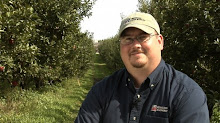
Tuesday, August 23, 2011

Apple harvest brings new challanges

Well, it's that time of year, time for the days to shorten, the air to chill, and the apples to come off the trees. Growing up in an area of fruit production, I guess I've always known how apples were picked, and generally assumed that most farmer knew as well; boy was I wrong! Sitting here at the AgChat Foundation Conference, I'm amazed that I've needed to explain several times now to people just how dependent of migrant labor we really are. Even other farmers didn't realize that apples are harvested by hand, one by one.

In order to harvest apples correctly, we depend on migrant labor, and they are far more than just employees to us; they are a valued part of our team. We can do everything right, all year, and if we don't have skilled, efficient, workers to harvest our crop, it's all for naught. I guess this is why it's so disheartening to hear the discourse regarding migrant labor and immigration. Now, I'm the great-grandson of dutch immigrants; we waited in line like everybody else. However, we need to get real with this problem. Migrant labor is a vital part of, quite honestly, our national security, and we need to realize that.

Now, I'm not advocating a free pass; but right now, we have bigger problems in this country than this, and quite honestly, we could use the money (tax revenue). Secure the border, bring these people out of the shadows, and make them start paying taxes; they are already benefitting from our social system, we might as well get some money out of it.

Our country needs a secure food supply. Consumer demand is asking for more and more fresh fruits and vegetables, and we need to have them raised by our standards, on our land. Support common sense immigration reform, and remember, your next meal may depend on it!

Thursday, June 2, 2011

Safest food on the planet, now at lower temperatures!

Hopefully, you were able to enjoy the great weather this past memorial day weekend, and while you were waiting for some tasty cuts of pork or beef to come hot of the grill, you took the time to remember the brave American soldiers who paid the ultimate price to allow us such great freedom. I have nothing but absolute respect and admiration for those men and women, and I must say, I feel a little guilty bringing this up. However, in addition to thanking those brave souls for our freedom, we can also thank the American farmer who helped bring us that meal, and provided us with the safest food on the planet.


Last week, the USDA released a statement telling us something that many farmer have known for years; that it is perfectly safe to cook pork to medium, at 145 degrees internal temperature. This announcement is great news for consumers, and reinforces a basic truth about our food: that it is truly safe, and that modern farming practices have contributed to it. For example, years ago, people were leery of pork, especially under-cooked pork, for many good reasons. The pigs lived outside, basically running loose, eating whatever happened to appear in front of them (I won’t get into details). Today, pigs live comfortably inside clean, well-lit, climate controlled barns; which are probably a lot cooler than my old farmhouse right now. The pork is harvested and processed in state-of-the-art facilities, which are cleaned, scrubbed, and inspected daily within an inch of their lives. The USDA and its watchful eye are never more than a stones throw away, providing guidance and oversight to the industry.


But outside of the processing world, pork farmers are doing the right things as well. Large and small alike, most farmers today are PQA+ Certified, meaning they have taken part in a voluntary program that holds them to a higher standard, and helps them produce a better product.


Farmers today care more about food and consumer safety than ever. As a farmer, it kills me to see a recall, or hear about people getting sick from a food-borne illness, because I feel like I have somehow failed. You depend on me for safe food the same as you would depend on a fireman to come save your house in a fire. We all have a job to do, and we want to do it well. From soldiers to farmers, we’re all working to protect American consumers.


Jeff Vander Werff is a 4th generation farmer from Sparta, Michigan. Learn more about how safe your food really is at www.youtube.com/agsalesman

Monday, May 16, 2011

Recall This.


So last week a California company recalled 16,000 pounds of lunch meat due to concerns about listeria contamination. Hearing this on the news, I think the first reaction of most people is to thing, wow, that’s a lot of lunch meat, but when you really think about it, it’s not, and it proves why our food is the safest in the world.


Think about it; we live in a country, where for the first time in the recored history of the planet, we can enjoy food just about any way we want it. We can eat eggs over easy for breakfast without fear, have sushi for lunch, and then enjoy a rare steak and a caesar salad for dinner, all without the worry of a food borne illness. Imagine living in a country where you go to the market, and you have to live in fear of what might be lurking in your food.


Food recalls like this are actually a good thing; they prove and reinforce to us that our food is not only produced safely, but handled and processed safely; I mean, would you rather NOT know that there was an issue, and risk getting sick? No, you wouldn’t. That’s why the USDA inspects food and facilities; so we can find problems, correct them, and improve safety.


Finally, let’s put this recall in perspective. Sure, 16,000 lbs sounds like a HUGE number, and yea, that’s a lot of meat. But think of it this way; according to the last census, the Grand Rapids, Michigan metro area has around 1 million residents. Let’s assume that one in 10 of them eat a cold-cut of some kind for lunch everyday-that’s brown baggers, Subway, Jimmy John’s, ect, and that each consumes around a quarter pound of lunch meat-that’s about average. So that’s 100,000 people eating 25,000 pounds of lunch meats EVERY DAY. This recall is a drop in the bucket!! There literally isn’t enough meat in this recall to supply a mid-sized American city for a single day.


Food safety is top of mind these days for many Americans, especially farmers and ranchers. When I ship a product, whether it’s fresh apples or wheat to the flower mill, I want to make sure you’re receiving a safe, nutritious product. I know I’m doing my part, and you can rest assured the USDA and processors are doing their’s as well.


Jeff Vander Werff is a fourth generation farmer from Sparta, Michigan. Learn more about food safety and your food at www.youtube.com/user/agsalesman